
Tehran’s Water Crisis Revives the Idea of Moving the Capital
Prepared by:
SAWFAR News – Regional Affairs Department
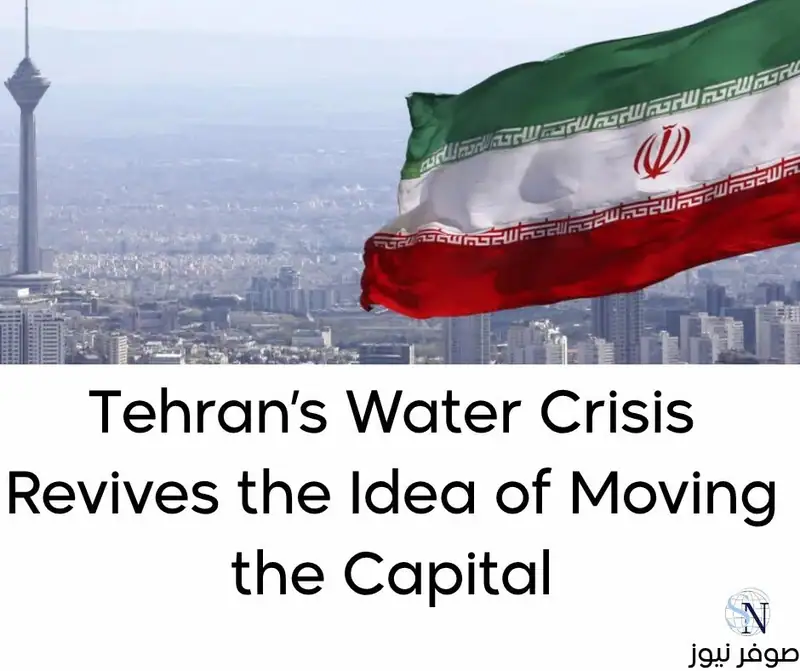
Tehran is facing one of the most severe environmental crises in its modern history, as the water shortage worsens day by day amid prolonged drought, declining rainfall, and growing residential and industrial consumption. The Iranian capital, home to more than nine million people, is now suffering from a severe water deficit, while the ground beneath it continues to sink due to excessive groundwater extraction — threatening its infrastructure and urban future.
The dams that once supplied Tehran with water — such as Lar, Latyan, and Karaj — are no longer sufficient to meet daily needs. Authorities warn that dozens of other Iranian cities face the same danger. Against this backdrop, the long-debated proposal to relocate the capital to a more environmentally stable and less crowded area, such as Semnan or Qom, has resurfaced as a way to ease the demographic and environmental pressures on Tehran.
However, the decision remains stuck between urgent necessity and enormous cost. Iran’s sprawling capital now stands at a critical crossroads: either a comprehensive restructuring of its water management and urban expansion, or a gradual transition toward an alternative capital that ensures sustainability and the country’s future.